
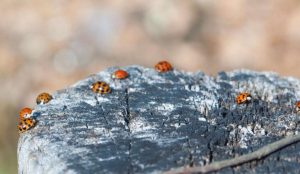
In the late summer and early fall when the nights become cold, Asian lady beetles, cluster flies, boxelder bugs, and other insect pests seem to suddenly appear, covering houses and other structures as they search for shelter and warmth. Understanding why overwintering pests do this can help you take preventative action before a minor nuisance outdoors becomes an infestation indoors.
Overwintering insects look for shelter before winter arrives to survive the cold months and stay until warmer weather returns. Holes on the outside of homes, walls, attics, garages, sheds, and other buildings can offer insects access to shelter. Overwintering insects that can fly are more likely to be found gathering on the south and west-facing areas that get the most sunlight and upper areas of larger buildings. Most overwintering insects do not infest food or damage structures.
What To Do When the Pests Appear in the Middle of the Winter
Once inside, many insect pests can remain hidden for months. An infestation might go unnoticed until insects begin appearing around windows and lights on warm winter days or early spring.
Insect light traps and a vacuum cleaner can collect overwintering insect pests that are not attracted to anything other than light and warmth.
Common Overwintering Pests Found Around Homes
Cluster Flies
Cluster flies are parasitoids of earthworms, do not breed indoors, usually start looking for shelter in August and September, and they are often mistaken for house flies. Cluster flies spend the winter hidden inside wall voids, attics, and other secluded areas. Large numbers of these flies may come out and appear around windows and lights during warmer days in winter or early spring.
Asian Lady Beetles
Asian lady beetles are a common overwintering pest, unlike ordinary ladybugs that normally spend the winter outside. These beetles usually start looking for shelter in September and October. Asian lady beetles can bite people and pets. They may leave stains and unpleasant odours when disturbed. They normally lay their eggs on plants outdoors in the Spring, where their eggs will hatch into larvae that eat other bugs.
Boxelder Bugs
Boxelder bugs of various life stages can be found climbing up buildings during the fall and can become a nuisance. They rarely cause significant damage to the plants they feed on.
Root Weevils
Root weevils such as strawberry root weevils and black vine weevils do not fly, are attracted to moisture, and feed on plants without causing enough damage to harm plants.
Sowbugs
Sowbugs are nuisance pests that may crawl into buildings when the weather is not favourable to them at any time of year that they are active. Sowbugs need high amounts of moisture to survive.
How to Prevent Overwintering Pest Problems
Prevention is most effective before overwintering pests try to find shelter and should be done before freezing temperatures. Watch the nightly weather forecast in the fall.
Physically reduce the opportunities for pests to find a way indoors by sealing cracks and gaps in the building exterior, inspecting and repairing damaged screens and vents, and installing door sweeps and weatherstripping. Look for and seal holes around windows, doors, soffits and fascia, vents, light fixtures, and utilities such as water pipes and telecom lines. Avoid trapping lint in clothes dryer vents. Lower the numbers of sowbugs and vine weevils crawling inside by reducing moisture around the outside of buildings and keeping the area free of plants and organic debris. Physical exclusion is not always enough because overwintering insects can crawl through very small holes.
Many overwintering insects are attracted to light, and reducing the amount of outdoor light or indoor light visible from outside may help.
A treatment on the outside of your home can help keep overwintering pests out. Contact Poulin’s Pest Control for a professional treatment plan to provide peace of mind throughout the winter season.